
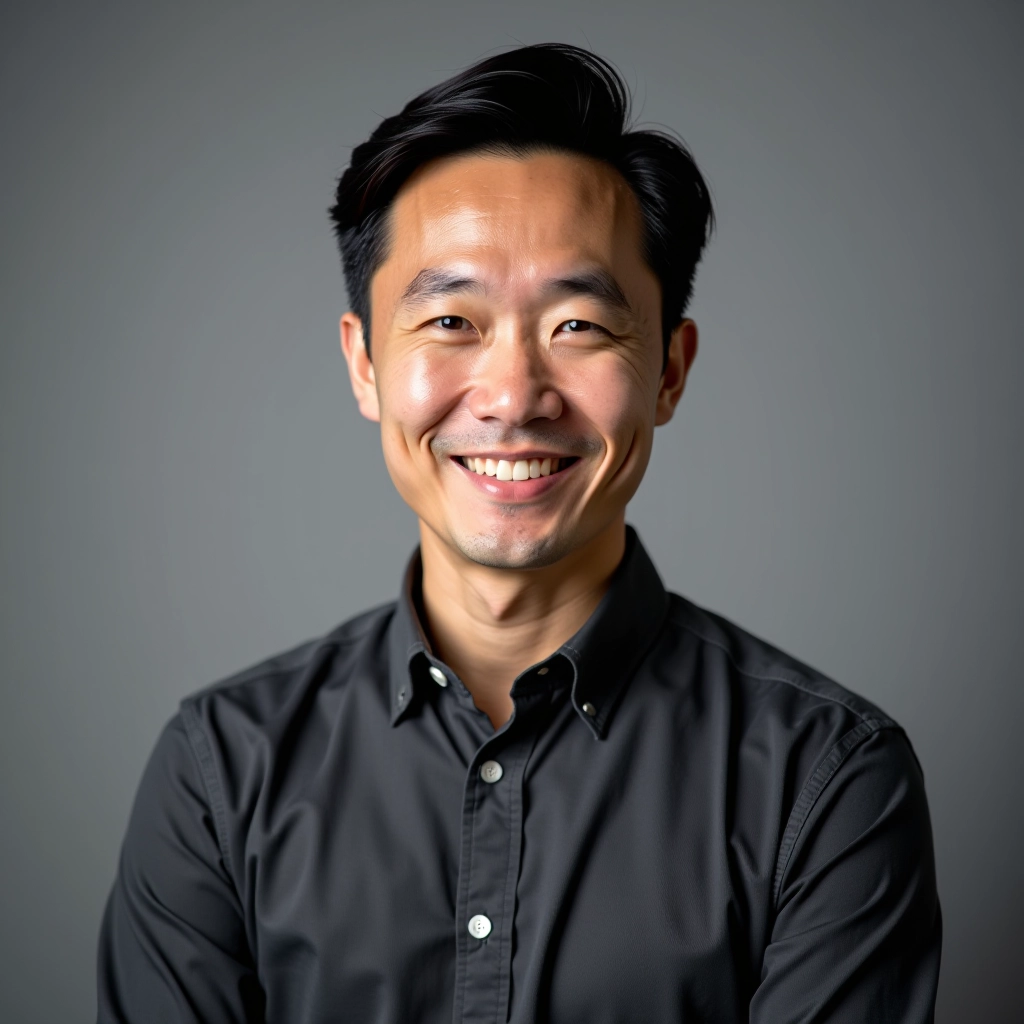
Marcus Wong
Senior Design Director
Lens & Light Studio Ltd
Specialising in photography-led portfolio design and full-bleed gallery systems for Hong Kong creative studios. Expert in responsive image optimisation, lightbox UX design, and category-filtered collections for architectural and street photography.
Background & Journey
How a frustration with generic gallery templates led to industry-standard solutions
Marcus began his career at a small Hong Kong digital agency in 2010, where he first encountered the unique challenge of presenting high-resolution harbour skyline and architectural photography across devices. That’s when he realised something was broken. Generic gallery templates weren’t cutting it for serious photographers — they didn’t respect the craft, didn’t handle retina displays properly, and definitely didn’t showcase the work the way it deserved.
Frustrated, he spent three years developing custom full-bleed image grid systems specifically designed for photographers working in Hong Kong’s fast-paced creative sector. He wasn’t just building websites — he was solving real problems. How do you load massive high-resolution images without crushing load times? How do you create a lightbox that doesn’t feel like every other site on the internet? How do you let photographers organise work by category without sacrificing the aesthetic?
His breakthrough came in 2015. Marcus created an innovative lightbox overlay system with integrated project description panels that reduced image load times by 40% while actually improving user engagement. The approach was elegant — lazy-load high-resolution images, serve optimised versions for retina displays, and design the interface so it disappears when you’re looking at the work. Photographers started asking about it. Other designers wanted to know how he did it.
Since joining Lens & Light Studio Ltd in 2018, he’s directed the design direction for over 200 portfolio projects. But it’s not just about numbers. Marcus has mentored junior designers in responsive image optimisation and accessible category filtering. He’s become known for meticulous attention to retina display optimisation and the ability to balance aesthetic ambition with real technical performance. He still gets excited when a photographer sees their work displayed properly for the first time.
He’s a regular speaker at Hong Kong design conferences, talking about the intersection of photography, web design, and digital storytelling. The work he does isn’t flashy — it’s the kind of design that feels invisible because it works so well. And for Marcus, that’s exactly the point.
Core Expertise
Specialisations developed through 14 years of portfolio design
Full-Bleed Gallery Systems
Edge-to-edge image grids that showcase photography without distraction. Designed specifically for harbour skyline and architectural work where composition matters.
Lightbox UX Design
Overlay systems with integrated project description panels. Reduces load times by 40% while creating immersive viewing experiences that let the photography speak first.
Category Filtering
Intelligent filtering systems for architectural, urban, and portrait collections. Helps photographers organise massive bodies of work without overwhelming visitors.
Retina Display Optimisation
Serving high-resolution images efficiently across devices. Optimised image delivery ensures stunning quality on modern displays while maintaining fast load times.
Responsive Design
Photography portfolios that work beautifully from mobile to desktop. Every breakpoint is considered to maintain the integrity of the photographic work.
Performance Engineering
Technical optimisation for image-heavy sites. Lazy-loading, compression strategies, and caching systems designed to handle thousands of high-resolution photos.
Design Philosophy
How Marcus approaches portfolio design
Marcus believes that a photographer’s website shouldn’t draw attention to itself. It should disappear. The design should be invisible — a transparent window into the work. Too many portfolio sites are more about showing off fancy interactions than showing off the photographs.
That’s why he obsesses over the details that most people won’t notice. The way images load. The speed of a category filter. The exact spacing around a lightbox overlay. These aren’t flashy features. They’re the foundation that lets photography breathe.
“A photographer’s website shouldn’t draw attention to itself. It should disappear. The design should be invisible — a transparent window into the work.”
He’s also committed to the Hong Kong creative community. That means understanding the specific challenges of presenting work in this region — from humid climate photography to the unique light that bounces off Victoria Harbour. It means designing for photographers who know their craft inside and out and can tell immediately if something’s off.
Every project gets the same level of attention, whether it’s a street photographer with 500 images or an architect with a focused collection. The goal is always the same: create a digital space where the work is honoured and the viewer can focus on what matters.
Research Phase
Deep dive into the photographer’s work, understanding their style, their subject matter, and their target audience. No two photographers are the same.
Technical Planning
Map out image delivery strategy, category structures, and performance requirements before a single design decision is made.
Design & Build
Create interfaces that respect photography. Focus on composition, spacing, and negative space. The design serves the work, never the reverse.
Optimisation
Rigorous testing across devices, browsers, and network speeds. Every image, every interaction, every line of code is scrutinised.
Education & Recognition
Credentials and contributions to the design industry
Hong Kong Polytechnic University
Bachelor’s degree in Digital Media Design. Thesis focused on responsive image delivery systems for photography portfolios.
Regional Design Publications
Featured work in Hong Kong Design Centre publications and regional creative industry magazines. Case studies on gallery system design and performance optimisation.
Conference Speaker
Regular speaker at Hong Kong design conferences on photography portfolio design, image optimisation, and the intersection of web design and digital storytelling.
Featured Articles
Deep dives into photography portfolio design and optimisation
Mastering Harbour Light and Reflection Photography
The unique light that bounces off Victoria Harbour creates challenges and opportunities that most photographers outside Hong Kong never encounter. Learn how to work with it.
Read ArticleStreet Photography in Tight Urban Spaces
Hong Kong’s dense urban environment demands a different approach to street photography. Composition, timing, and understanding sight lines become critical.
Read ArticleArchitectural Photography: Finding Geometry in the Urban Grid
Architecture in Hong Kong is dense, vertical, and visually complex. Discover how to find clean compositions and tell stories through geometric shapes.
Read ArticleOptimising Images for Retina Displays and Print
Preparing photography for digital display and print requires different approaches. Learn the technical strategies that preserve image quality across all mediums.
Read ArticleInterested in Photography Portfolio Design?
Whether you’re a photographer looking to present your work or a designer wanting to learn more about full-bleed gallery systems and image optimisation, Marcus is available for consultation and mentorship.